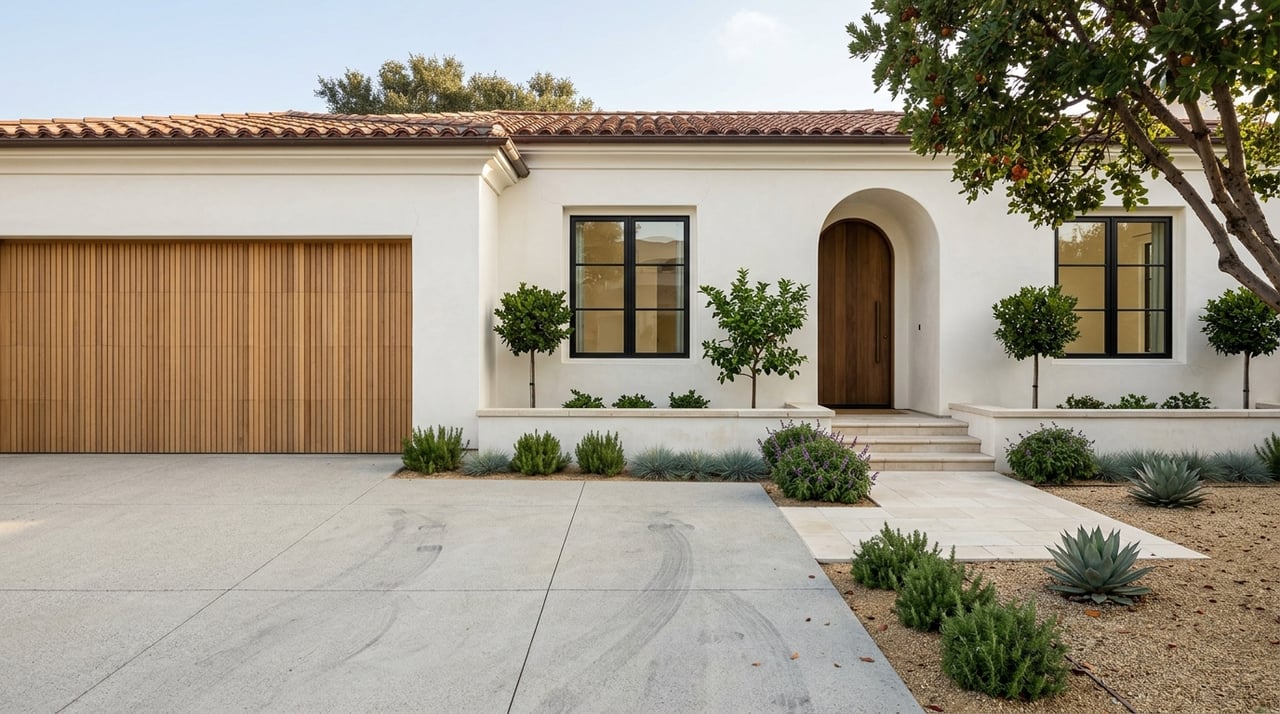
If you are weighing La Cañada Flintridge against Pasadena and Glendale for a long-term real estate investment, the right answer depends on what kind of investment you want to own for the next decade, not just what looks best on paper today. Some buyers want stronger rent efficiency. Others care more about scarcity, resale strength, and long-term wealth preservation. This snapshot will help you compare the three markets clearly so you can match your strategy to the market that fits it best. Let’s dive in.
La Cañada’s Investment Profile
La Cañada Flintridge sits in a very different category from nearby Pasadena and Glendale. According to Zillow home value data, the typical home value is about $2.49 million in La Cañada, compared with roughly $1.19 million in Pasadena and $1.20 million in Glendale.
That price gap matters because it changes the investment story. La Cañada is not the obvious choice if your main goal is maximizing rent yield. Instead, it tends to appeal more to buyers who value limited supply, strong household wealth, and long-term holding power.
Compare Prices and Rent Efficiency
Home values are only part of the picture. Rent levels and rent-to-value ratios help show how efficiently a property may generate income relative to its purchase price.
Based on Zillow’s current value and rent indexes, the rough annual rent-to-value ratio is about 2.5% in La Cañada, 3.0% in Pasadena, and 2.7% in Glendale. That suggests Pasadena currently offers the best rent-to-price balance of the three, while La Cañada has the weakest cash-yield profile despite its higher absolute rents.
| Market | Typical Home Value | Typical Rent | Rough Rent-to-Value Ratio |
|---|---|---|---|
| La Cañada Flintridge | $2.49M | $5,233 | 2.5% |
| Pasadena | $1.19M | $2,966 | 3.0% |
| Glendale | $1.20M | $2,751 | 2.7% |
For many long-term buyers, that means La Cañada is less of a cash-flow play and more of a scarcity-driven asset. Pasadena and Glendale may look more attractive if you want a lower entry price and a somewhat better income profile.
Scarcity Sets La Cañada Apart
One of the clearest differences is market scale. U.S. Census QuickFacts shows La Cañada Flintridge has an estimated population of 19,621 and an 86.9% owner-occupied rate.
By comparison, Pasadena has 137,195 residents with a 42.5% owner-occupied rate, and Glendale has 187,823 residents with a 35.2% owner-occupied rate. That makes La Cañada a much smaller, more owner-dominated market, which helps explain why inventory can feel especially tight.
Rental supply tells a similar story. Zillow Rental Manager market trends show just 17 active rentals in La Cañada, versus 657 in Pasadena and 833 in Glendale. That does not prove vacancy rates, but it does show how thin the rental sample is in La Cañada compared with the other two cities.
Resale Speed and Market Liquidity
If you are thinking long term, you also want to understand how quickly homes tend to move when it is time to sell. Redfin housing market data shows La Cañada remains highly competitive, with homes receiving 7 offers on average and selling in about 21 days.
Pasadena averages 4 offers and about 37 days on market, while Glendale averages 5 offers and about 36 days. Sale-to-list ratios are also strong across all three markets, at 103.0% in La Cañada, 102.2% in Pasadena, and 100.5% in Glendale.
For a buyer focused on long-term resale strength, that is meaningful. La Cañada’s tighter inventory and stronger competition can support the idea that it functions more like a scarce, low-turnover market than a volume-driven rental market.
Read Appreciation Data Carefully
Appreciation trends in La Cañada need context. Redfin reported only 6 home sales in February 2026, with a median sale price of $2.31 million, down 25.7% year over year, while Zillow’s March 31, 2026 value index showed a typical home value of $2.49 million, up 1.2% year over year.
Those two numbers do not necessarily mean the market is sending mixed signals. In a small, high-end market like La Cañada, a limited number of sales can swing median price data sharply depending on what type of homes closed in a given month or year.
Pasadena and Glendale show less volatility because their transaction pools are larger. Zillow’s value index shows Pasadena down 1.2% year over year and Glendale down 0.6%, while Redfin’s closed-sale medians show Pasadena down 3.7% and Glendale up 0.6%.
The practical takeaway is simple: La Cañada data can look noisier in the short term, but that does not automatically point to a broad change in underlying demand. If you are investing for the long run, it is wise to read small-market price swings with caution.
Tenant Demand Looks Different in Each City
Your ideal property type may change depending on the renter base you want to serve. Census data shows La Cañada has 3.12 persons per household, 27.0% of residents under 18, 75.1% with a bachelor’s degree or higher, and a median household income of $241,875.
Pasadena is broader and more mixed, with 2.30 persons per household, 16.7% under 18, 56.1% with a bachelor’s degree or higher, and median household income of $105,192. Glendale has 2.60 persons per household, 18.4% under 18, 47.2% with a bachelor’s degree or higher, 51.5% foreign-born residents, and 66.2% speaking a language other than English at home.
These figures suggest different tenant pools. La Cañada appears most aligned with larger single-family rentals and higher-income households, while Pasadena offers a broader renter mix and Glendale provides deeper rental-market scale.
Risk Factors Investors Should Not Ignore
Every market comes with tradeoffs, and La Cañada’s clearest one is natural hazard exposure. The City of La Cañada Flintridge Building & Safety page states that the entire city is within a Very High Fire Hazard Severity Zone, and that earthquake fault zones can trigger geologic review before many new projects are permitted.
That matters if you plan to remodel, build, or hold hillside property. It can affect building requirements, fuel-modification obligations, and the level of due diligence you should complete before closing.
Pasadena also has wildfire exposure, but the policy environment is different. The City of Pasadena Fire Department notes updated Fire Hazard Severity Zone maps, and Pasadena also adds a local rent-stabilization framework on top of California’s statewide tenant protections.
Pasadena’s Rent Stabilization Department requires a rental registry for covered units and lists a 2.25% annual general adjustment effective from October 1, 2025 through September 30, 2026 for covered units. Combined with the statewide Tenant Protection Act baseline described by the California Attorney General, Pasadena is the most compliance-heavy of the three from a rental-operations standpoint.
Glendale’s practical risk picture is more focused on hillside vegetation management. The city’s Vegetation Management Program includes annual inspections for certain hillside and canyon properties in high fire hazard areas and may require substantial defensible space.
For investors, those obligations can translate into ongoing maintenance and operating costs. That does not make Glendale a poor investment choice, but it does reinforce the need to evaluate each property on its exact setting and condition.
Which Market Fits Your Strategy?
For many buyers, the clearest way to compare these three cities is by investment style rather than by headline pricing alone.
La Cañada Flintridge may fit you best if you are looking for:
- Long-term scarcity
- A highly owner-occupied market
- Strong resale competitiveness
- Wealth preservation over near-term yield
- Larger single-family asset positioning
Pasadena may fit you best if you want:
- A lower entry price than La Cañada
- Better rent-to-price balance
- Broader tenant demand
- A middle ground between appreciation potential and rental flexibility
- Willingness to navigate more rental regulation
Glendale may fit you best if you want:
- A deeper rental market
- More inventory depth
- A large renter base
- Similar pricing to Pasadena
- Comfort with hillside maintenance requirements on applicable properties
The Bottom Line for Long-Term Buyers
La Cañada Flintridge is best understood as a scarcity and wealth-preservation market, not a high-yield rental market. Its high entry price, thin rental supply, strong household incomes, and tight resale conditions make it attractive to buyers who value long-term positioning and limited supply.
Pasadena offers the most balanced profile based on current data. Glendale offers broader rental-market depth. If your goal is pure rent efficiency, La Cañada is probably not the strongest fit of the three. If your goal is owning a scarce asset in a tightly held market, it may be exactly the right one.
If you want help comparing specific streets, property types, or holding strategies across La Cañada, Pasadena, and Glendale, Thomas Atamian + Associates can help you evaluate the numbers in the context of your long-term goals.
FAQs
Is La Cañada Flintridge a good market for rental cash flow?
- Based on current Zillow figures, La Cañada has the weakest rough rent-to-value ratio of the three markets at about 2.5%, so it appears stronger for scarcity and long-term positioning than for cash yield.
How does Pasadena compare to La Cañada for investment property?
- Pasadena has a lower entry price, deeper rental demand, and the strongest rough rent-to-value ratio of the three, but it also has more local rent-stabilization complexity.
Is Glendale a better choice than La Cañada for scalable rentals?
- Glendale appears better suited to a broader rental strategy because it has more inventory depth, a larger renter base, and far more active rentals than La Cañada.
Why does La Cañada housing data look more volatile?
- La Cañada is a smaller, higher-end market with fewer sales, so median sale prices can swing more sharply based on a small number of closings.
What risks matter most for La Cañada investment property?
- The city states that all of La Cañada Flintridge is within a Very High Fire Hazard Severity Zone, and some projects may also face earthquake fault-zone review and added disclosure or building requirements.